
New York’s history offers many unexpected turns, as a group of volunteer Greeters learned when they toured Mystery and Wonder: A Legacy of Golden Age Magicians in New York City.
Annemarie van Roessel, assistant curator of the Billy Rose Theatre Division at The New York Public Library for the Performing Arts, offered insights into the items on display and the magicians who were part of magic’s “golden age” in the city between 1875 and 1925. The library houses the largest magic-related collection at a public institution anywhere in the world.
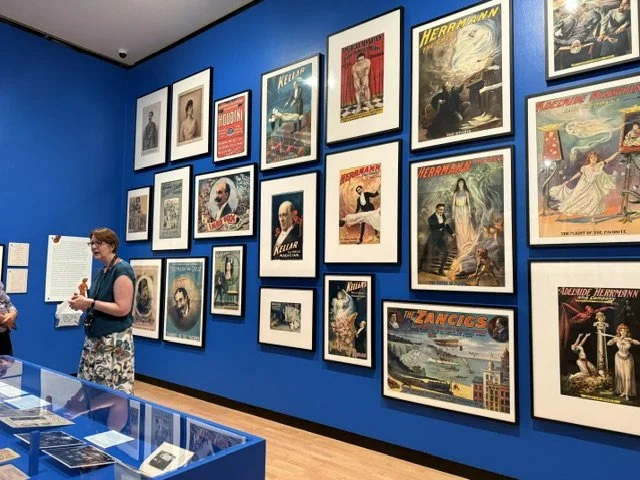
Like many New Yorkers in the late 19th and early 20th centuries, the golden-age magicians were immigrants, and three-quarters were Jewish.
One of those immigrants, amateur magician and medical doctor Saram R. Ellison, was an avid collector of material related to the art of illusion, and his collection forms the basis of the library’s collection. In addition to donating published materials and his correspondence with the most famous magicians of the day, Ellison was a co-founder of The Society of American Magicians, originally headquartered in New York.
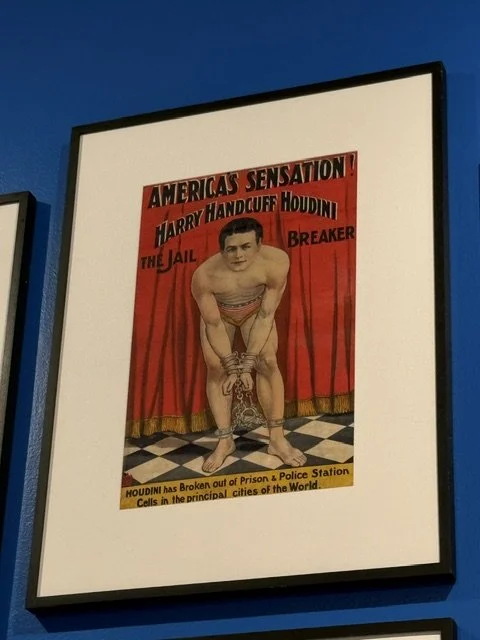
Ellison’s magician friends included Harry Houdini, the master illusionist renowned for his ability to escape after being placed in everything from an oversized milk can to a straitjacket to a grave six feet underground.
Houdini died at only 52, either from a ruptured appendix or as the result of being punched repeatedly in the abdomen 10 days before his death. His home at 278 West 113th Street in Harlem is a private residence, but you can visit his gravesite at the Machpelah Cemetery in Queens.
Adelaide Hermann, billed as the “Queen of Magic,” was one of the few women working as a magician, initially as an assistant to her husband Alexander.
After he died, Adelaide took over the act and toured the US and Europe for 25 years. One of her best-known illusions was the “bullet catch,” in which a magician appears to catch a bullet fired at her in her teeth or hand. Adelaide Hermann’s home was in New York, and she is buried at the Woodlawn Cemetery in the Bronx.
As an entertainment and transportation hub, New York was a great base for working magicians. The Martinka Magic Shop, founded by brothers Francis and Antonio, was originally on Sixth Avenue in Manhattan and is now in New Jersey.
It was not only a place to purchase supplies. The store’s backroom housed a workshop in which Martinka employees built props and illusions for their customers. The shop became a gathering place for professional and amateur magicians, and the Society of American Magicians was founded in the backroom.
Houdini and the Martinka Brothers are gone from NYC, but there are still traces of magic around town.
For today’s magic lovers, a visit to Tannen’s Magic at 45 West 34th Street is a must. Founded in 1925, the store sells magic-related books and accessories, hosts magic shows, and sponsors a summer camp for young magicians.
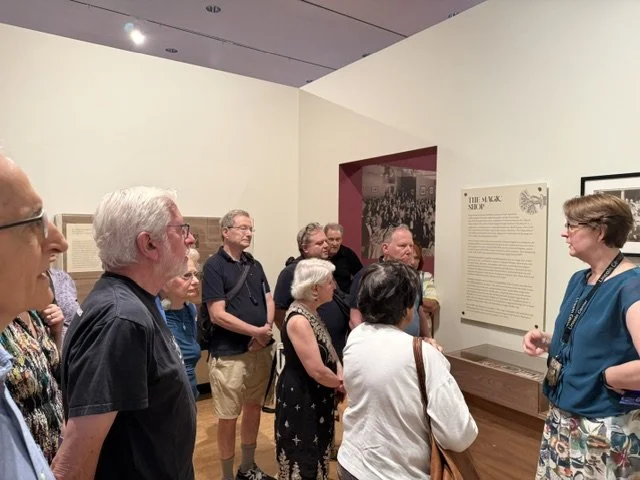
The Mystery and Wonder exhibit has closed, but visitors to the New York Public Library for the Performing Arts can explore other artifacts, including a first edition of the Star-Spangled Banner, on view through August 31, 2026.
The exhibit Martha Graham: The Mother of Psychological Dance runs through November 7, 2026.
Missed a show you wanted to see? Check the Theatre on Film and Tape Archive to find out if the library has a recording of the production, and to learn how you can view the recording.
Located at 40 Lincoln Center Plaza (111 Amsterdam Avenue, between 64th and 65th Streets) and open Monday–Saturday, a visit to the Library for the Performing Arts is a fitting prelude to an opera, dance, symphony, or theater performance at Lincoln Center.