
The Name That Stuck: A Greet Through Astoria’s Layers
Did you know Astoria takes its name from a man who is said never to have set foot there?
It was a 19th-century branding play. In 1839, local developer Stephen Halsey named the area in western Queens after John Jacob Astor, then among the richest men in the United States, hoping to coax him into backing the new village. According to the most commonly cited version of the story, Halsey hoped Astor would contribute $2,000, but Astor gave only $500. The name, however, became permanent.
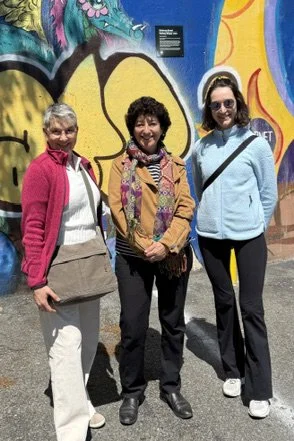
On a perfect spring day, Greeter Rosalind Shane met Birgit and Lisa, a mother and daughter visiting from Germany, to explore the neighborhood's many stories.
Rosalind’s deep knowledge of the area’s evolution provided a rich backdrop as they took the R train from Times Square to Steinway Street, one of Astoria’s main commercial and cultural stretches.
Their first stop was Kaufman Astoria Studios. Built in 1920–21, the studio became the East Coast production headquarters of Famous Players-Lasky, the forerunner of Paramount Pictures.
At a time when New York was still central to the film industry, Astoria was a major production hub. The Marx Brothers shot their first two films, The Cocoanuts and Animal Crackers, there, and silent-era stars such as Rudolph Valentino and Gloria Swanson worked on its stages.
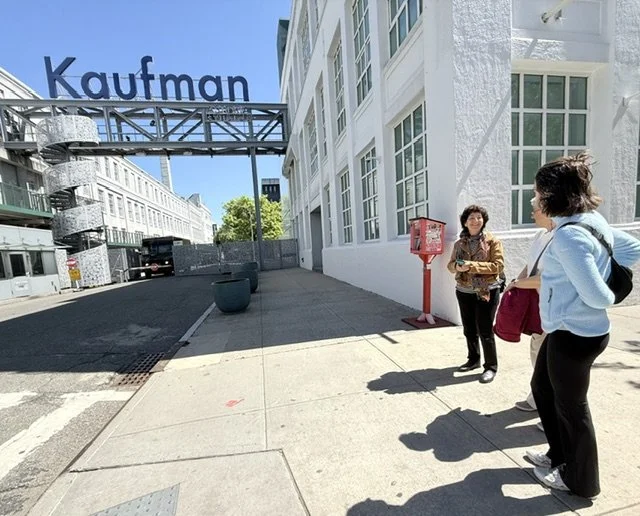
Walking along Steinway Street, Rosalind brought Astoria’s industrial history into view. The street takes its name from the Steinway family, whose piano company built a factory and a dedicated company village in this part of Queens in the 1870s.
Today, that same stretch reflects the many communities that have shaped the borough. The group passed through the area often called Little Egypt, known for its Middle Eastern markets and hookah lounges, and stopped at a local flea market, which the visitors enjoyed.
The walk then shifted into the heart of the Greek-American community. While Greek immigrants have long been part of New York’s fabric, Astoria’s Greek identity deepened significantly after the 1965 Immigration Act.
Arrivals from Greece and Cyprus turned the neighborhood into a major center of cultural life, filled with tavernas, bakeries, and churches that remain anchors of the community today.
Moving toward the East River, the group followed the waterfront alongside Astoria Park. The scale of the city feels different here, framed by the massive steel arches of the Hell Gate Bridge and the expanse of the RFK Bridge.
Rosalind pointed out the historic mansions on 12th Street built by the neighborhood’s original developer, Stephen Halsey, as well as the landmarked residence of Dr. Benjamin Bailey on nearby 14th Street—offering a glimpse into the area's 19th-century residential roots.
The afternoon concluded at the ferry terminal. Since the first arriving boat was heading uptown, the trio took the scenic route across the water to East 90th Street in Manhattan. It provided a quiet perspective on the skyline before Birgit and Lisa caught the Q train back toward their hotel, a final transition through the city’s transit system to end a day of exploration.
